How to Keep Flat-Pack Furniture Parts Organised During a Move
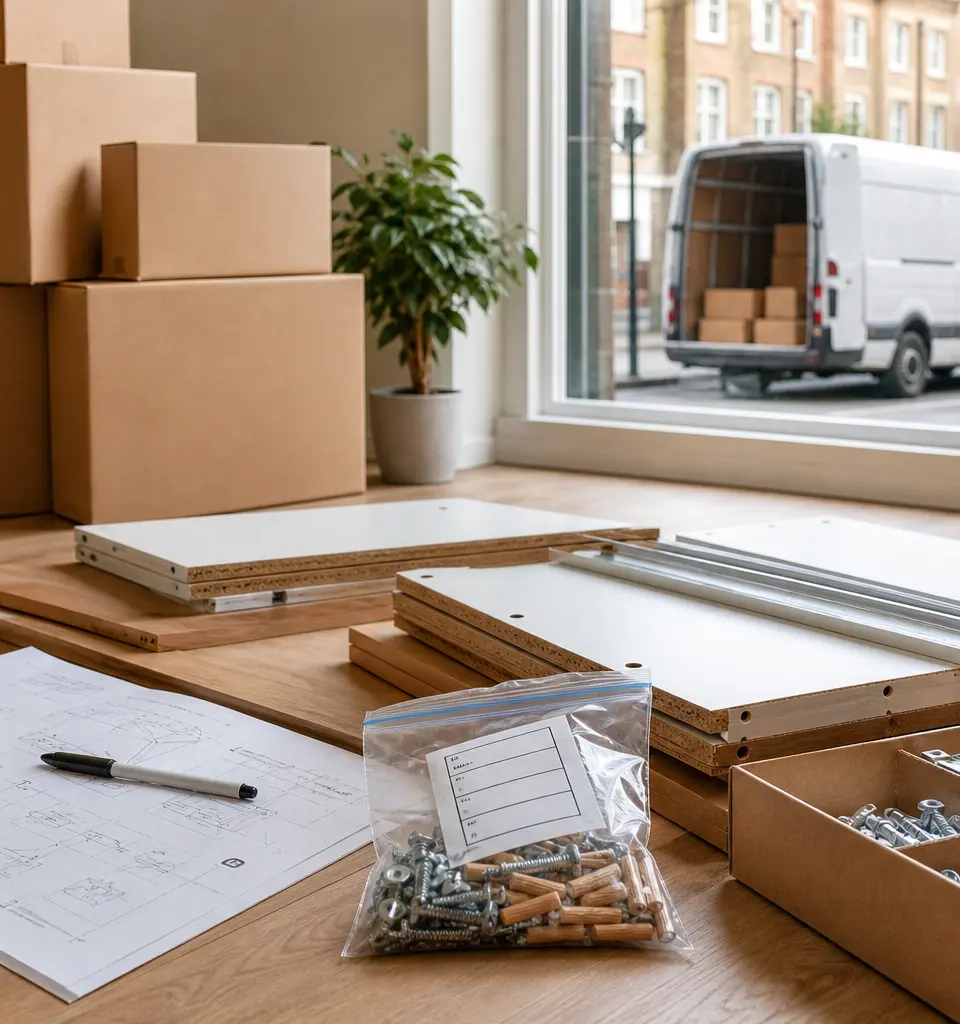
If you're moving flat-pack furniture, the small parts are often the trickiest to manage. Missing dowels, bolts or cam locks can delay reassembly and cause unnecessary stress. This guide gives a practical, room-by-room checklist and proven packaging techniques to keep every component organised from disassembly to reassembly.
Before you start: gather kit and prepare a plan
Spend 15–30 minutes assembling a few inexpensive supplies before you take anything apart. Having the right containers and labels makes the rest much easier.
Essentials
- Resealable clear bags (small and medium)
- Masking tape and a permanent marker
- Small plastic jars or pill boxes for tiny fittings
- Cardboard envelopes or labelled paper envelopes for manuals and larger fittings
- Zip-tie or elastic bands
- Colour-coded stickers (optional)
- A camera or smartphone to photograph steps and parts
- A printed index sheet or checklist for each item
Step-by-step disassembly and parts management
Work systematically, tackling one piece of furniture at a time. Rushing between items increases the chance of losing small parts.
1. Read the instructions first
Before disassembling, consult the manufacturer’s assembly manual if you still have it. Note the specific hardware types used—some pieces use branded connectors or unique fasteners. Photograph the final assembled piece and key connections; these images are useful if you need to re-order parts or show them to a fitter.
2. Create a parts bag at the point of removal
When you remove a panel or an element, immediately place its screws, dowels or fixings into a labelled resealable bag. Label format should include:
- Item name (e.g. “Wardrobe – left side”)
- Panel reference (if from the manual) or a short description (e.g. “back panel, 120x60”)
- Room destination at the new property (e.g. “Bed 2 – flat 3”)
- Quantity and a brief contents note (e.g. “6x 30mm screws, 6x cam locks”)
Seal and date the bag, then attach it to the larger panel using masking tape or store the bag in a labelled box dedicated to that item. If a bag contains a lot of different small parts, split them into sub-bags and number them—this reduces rummaging later.
3. Keep labelled manuals and small tools together
Place paper manuals, spare fittings and any small tools that came with the furniture into a flat envelope labelled with the item name. Store these envelopes together in a single “flat-pack paperwork” box so they are easy to find during reassembly.
Systems that work: labelling and indexing
Using a consistent labelling system saves time at the new property. Two common methods are box numbering and item-based indexing.
Box numbering
- Assign each packing box a number and note its contents on an index sheet. Example: Box 7 – “IKEA MALM Bed: base panels, legs, hardware bags A & B”.
- Keep a master inventory (a simple spreadsheet or written list) that maps box numbers to items and rooms.
Item-based indexing
Instead of box numbers, label each item itself with a short code (e.g. WB01 for wardrobe 01). Use this code on every associated bag and envelope. This is helpful if parts for an item are spread across several boxes.
Packing techniques to prevent damage and loss
Attach parts to panels where possible
For larger panels, taping the parts bag to the inside of the panel (facing inwards) keeps all components together. Use low-tack masking tape so paint or veneers are not damaged.
Protect delicate fittings
Wrap delicate metal rails, hinges or glass shelves in bubble wrap or corrugated cardboard. Put bulky, heavy items at the bottom of the van or removal box and lighter, labelled boxes on top.
Use clear, resealable bags for visibility
Clear bags let you confirm contents at a glance. For particularly small items such as cam locks, use pill boxes or small jars so items don’t slip out if a bag is briefly opened.
Checklist: what to include for each flat-pack item
- Item code and description
- Number of panels and rough sizes
- List of hardware types and counts
- Location at the destination (room and position)
- Assembly manual (paper or photographed copy)
- Any tools needed (allen keys, screwdriver bits) and whether you’re keeping them with the parts
- Photos of complex sections or unusual joins
- Notes on damage or missing parts
Keep this checklist with the matching box or in the master inventory file.
Dealing with missing or mismatched parts
If you discover a missing part during disassembly, note it immediately on your inventory and photograph the relevant hole, recess or bracket. With photographs and a clear list you can either:
- Order replacement parts from the manufacturer (use photos to identify the exact item), or
- Ask a professional to source compatible fixings if the manufacturer parts are obsolete.
Budget Moves can help arrange suitable removal professionals who are used to handling flat-pack items and can advise on reassembly or part replacement if needed.
Transport and on-arrival organisation
When loading the van, keep boxes with flat-pack parts together and near the door if they are going into the same room at the new property. On arrival, unpack only what you need right away; keep other labelled boxes stacked in the room where the item belongs.
Tip: set up a reassembly station
Designate a clear area where you’ll assemble the furniture. Lay out the panels, tools and labelled parts in logical sequence according to the manual. Having everything visible speeds up the process and avoids trips back into boxes.
Working with movers: what to ask and what to expect
If you’re hiring help for transport or reassembly, tell the company which items are flat-pack and describe how the parts are organised. Useful points to cover:
- Confirm whether the movers will assist with reassembly or only transport and placement.
- Tell them if parts are taped to panels or stored in particular boxes so they can take care not to separate them.
- Ask about handling fragile panels and glass components.
Budget Moves arranges and undertakes removals across London and can advise on best practice for moving flat-pack furniture. If you want professional help with packing, look at our dedicated packing services and consider booking a move through our online form.
Quick printable checklist (copy or screenshot)
- Prepare supplies: bags, tape, labels, camera.
- Photograph assembled pieces and key joins.
- Disassemble one item at a time; bag parts immediately.
- Label bags with item code, panel reference and destination room.
- Put manuals and spare fittings in a labelled envelope.
- Index boxes and keep a master inventory.
- Protect panels and fragile parts for transport.
- Set up a reassembly station at the destination.
- Keep a note and photos of any missing parts for replacement.
Summary
Flat-pack furniture is manageable with a small amount of planning: label clearly, keep parts with their panels where possible, and maintain a master index so you or a fitter can find everything quickly. These measures reduce delays and ensure a smoother reassembly after your move.
If you’d like assistance with transporting or protecting flat-pack furniture in London, get a quote from Budget Moves and tell us which items need special care. We can also arrange packing support or advise on in-home placement at the new address.
Get a quote for your move
Get a Quote