How to Pack Fragile Kitchenware for a Move — Practical Guide for London Moves
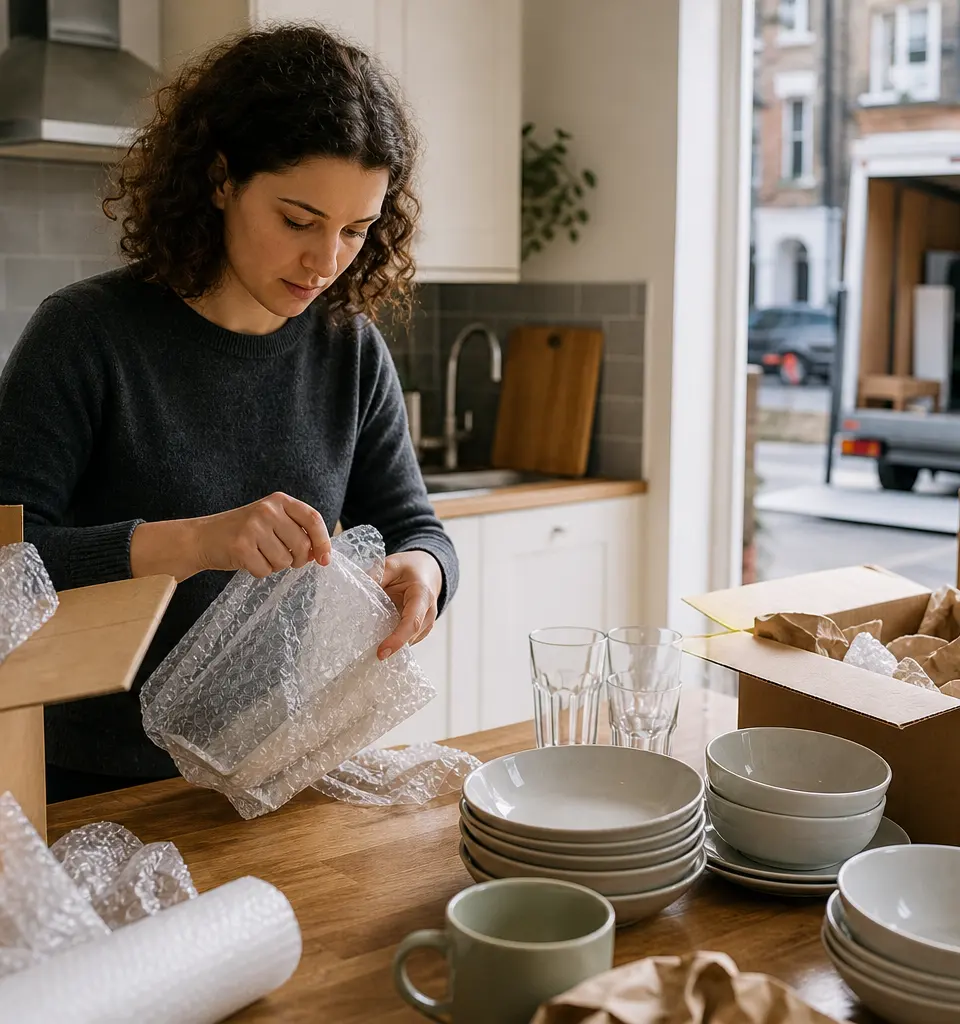
Moving fragile kitchenware can feel daunting, but the right approach and materials make it straightforward. This guide explains how to pack plates, glasses, china, cookware and sharp tools so items arrive intact. It is aimed at people moving in London and includes practical steps you can apply whether you’re doing the packing yourself or using a removal company.
Plan before you pack
Start by allocating time: packing fragile kitchen items properly is one of the more time-consuming parts of a move. Tackle one cabinet or drawer at a time so you don’t mix up items or run out of suitable packing materials.
- Sort: set aside anything cracked, stained or surplus to requirements — these can be donated or recycled.
- Group like with like: keep plates together, separate glasses from mugs, and pack sharp items (knives, skewers) safely and clearly labelled.
- Decide what you’ll pack yourself and what to hand to professionals. If you prefer not to pack delicate items, a removal company or a packing service can do this for you.
Gather the right materials
Using appropriate materials reduces risk of breakage. You can buy packing kits or assemble your own from the list below.
- Strong double-walled cardboard boxes in small and medium sizes (smaller boxes are safer for heavy items like plates).
- Bubble wrap and/or packing paper (unprinted newsprint is fine for padding and wrapping).
- Dish barrel boxes or wardrobe-style boxes for very fragile stemware if available.
- Dividers for glasses (cardboard partitions) or foam inserts.
- Packing tape and scissors/knife.
- Permanent marker for labelling and ‘Fragile’ stickers where possible.
- Thick towels, tea towels or bedding to pad boxes and fill gaps during transit.
Tip: re-use clean, corrugated cardboard from appliance boxes for extra protection under delicate stacks of plates or to line the base of a box.
Basic packing principles
- Wrap every item individually or in stable nested sets.
- Use small boxes for heavier items so they remain easy to carry and less likely to be crushed.
- Fill empty spaces so items cannot move inside the box; movement causes breakage.
- Label boxes clearly with contents and which side is up; mark the most fragile boxes so handlers know to take care.
Packing plates and saucers
Plates are heavy and rigid: pack them vertically like records rather than flat to reduce stress if the box is dropped.
- Layer: place a layer of crumpled paper or bubble wrap at the bottom of the box.
- Wrap: wrap each plate in packing paper or bubble wrap, then stack them on their edge.
- Use dividers: if you have cardboard dividers, slot plates into each compartment.
- Pad gaps: fill the remainder of the box with crumpled paper, tea towels or foam to stop lateral movement.
- Keep boxes small: a box of 10–15 plates is heavy; prefer smaller boxes if available.
Packing bowls, mixing bowls and cookware
Stack bowls by size and nest where appropriate with extra padding between each nested item.
- Place a pad (paper or bubble wrap) between nested items to avoid abrasion.
- For cast iron or enameled cookware, consider wrapping each item in cloths and using a separate box so heavy pans don’t damage lighter china.
- Don’t overload a single box with heavy pans; spread weight across boxes and keep them small enough to lift safely.
Packing glasses and stemware
Stemmed glassware is among the most fragile. If possible use dividers or purpose-built boxes. Otherwise, wrap each glass and add internal padding.
- Wrap the bowl of the glass first, then the stem and base, so the whole item is protected.
- Stand glasses upright in the box; if stacking is unavoidable, use strong partitions or foam inserts between layers.
- Fill any remaining gaps with scrunched paper or cloth to prevent glasses touching.
Packing knives and sharp tools
Never wrap knives bare. Protect points and blades carefully and mark boxes containing sharp items.
- Use blade guards or wrap blades in several layers of cardboard and tape.
- Place sharp items blade-down into a box so the edge cannot cut through the base; add a layer of padding beneath the blade.
- Label the box ‘Sharp items — handle with care’ so handlers are aware.
Packing small or irregular items
Utensils, measuring spoons, lids and small gadgets can be boxed together in a utensil box. Use small internal boxes or zipper bags to keep sets together.
- Wrap fragile gadgets individually and group small items in a sealed bag within the box to stop them falling into gaps.
- Stack lids standing on their edge or group them in a separate shallow box to stop them scratching other items.
Sealing, labelling and documentation
Once packed, seal boxes well with packing tape. Use clear, consistent labelling:
- Room name (e.g. Kitchen).
- Contents (e.g. 'Plates, medium - 12').
- Fragile status and orientation (e.g. 'FRAGILE - THIS SIDE UP').
For particularly valuable items, take photographs before packing so you have a record of condition in case of damage during the move.
Loading the van and transport considerations
When loading a removal van or vehicle, place boxes of fragile kitchenware on top of heavier, sturdier items and never under mattresses or large bulky furniture that could shift. If you’re hiring a removals team or arranging labour-only assistance, tell them which boxes are fragile and where you’d like them to be placed in the vehicle.
Budget Moves arranges removals and packing services across London and can pack fragile kitchenware as part of a packing-service booking or advise on whether you should pack items yourself. The owner personally carries out selected moving jobs and the company arranges or subcontracts other work to suitable removal professionals depending on the job and availability.
Unpacking tips at your new home
- Unpack fragile boxes first so delicate items are safe and you can set up essential kitchenware quickly.
- Keep plates upright when unpacking and unwrap one by one on a protected surface.
- Check items against your photographic record if you noted damage before the move.
When to ask for professional help
If you’re moving high-value china, a large collection of stemware, or you simply don’t have time, a professional packing service can save stress. Packing specialists use purpose-made materials and techniques to reduce risk. For removals that include packing or handling fragile goods, ask a provider about their packing options when you request a quote.
Ready to discuss packing as part of your move? Get a tailored plan and price by requesting a quote: https://budgetmoves.co.uk/get-a-quote.
Further practical checklist before moving day
- Label and segregate boxes containing daily-use items so you can access a few plates, cups and utensils on the first day.
- Keep a small toolkit and cleaning cloths handy for final checks and unpacking.
- Confirm loading instructions with anyone helping on the day (friends, hired crew or the removal company).
With correct materials, a calm plan and clear labelling, packing fragile kitchenware need not be the most stressful part of a move. If you prefer expert help, Budget Moves can arrange professional packing or a full packing service across London — start with a quick online quote at https://budgetmoves.co.uk/get-a-quote or explore packing services for more detail.
Get a Quote