Piano Move Preparation Checklist: What to Tell Removal Providers
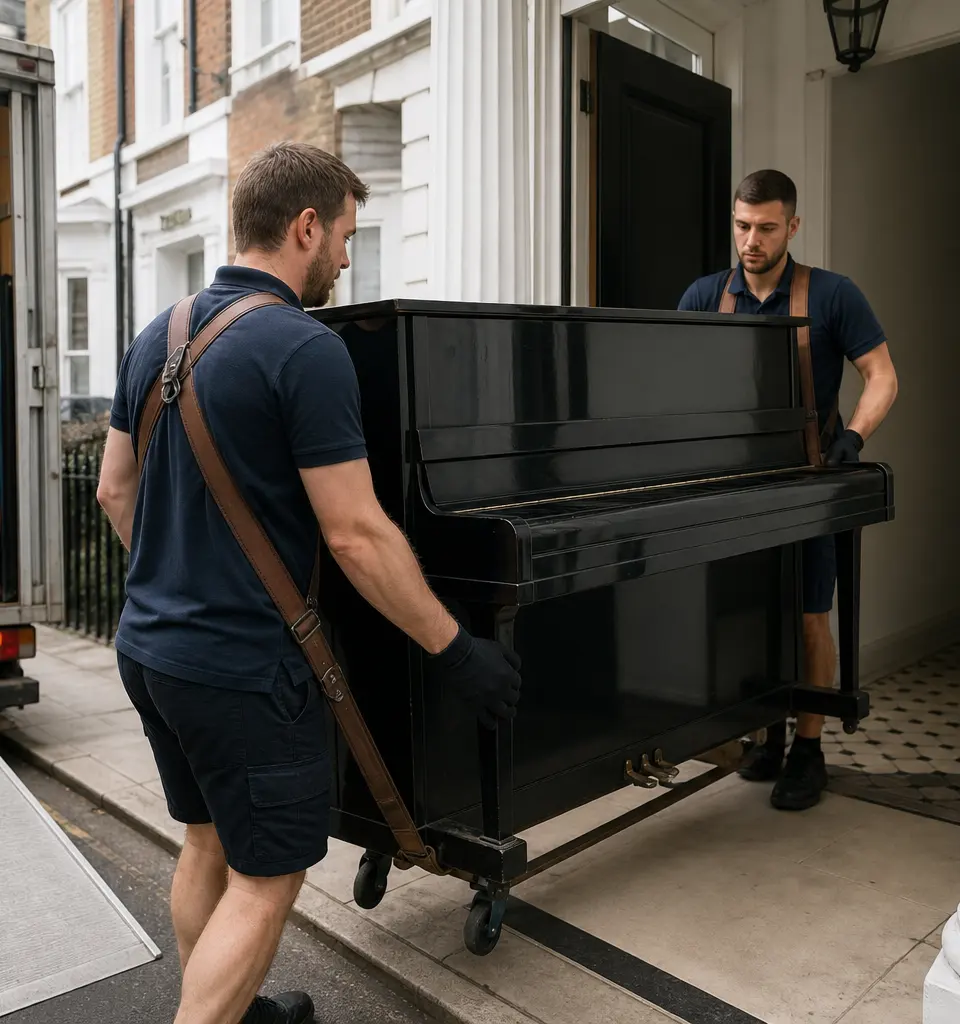
Moving a piano needs planning. This guide gives a clear piano move preparation checklist and explains exactly what to tell removal providers so they can quote accurately and plan safely. Follow these steps whether you’re arranging a move with Budget Moves or simply preparing information for any removal team.
Quick answer: the essentials to tell removals
At first contact, give removal providers these essentials: piano type (upright, baby grand, grand), approximate weight if known, exact pickup and drop-off addresses in London, floor levels, stairs or lift availability, door and corridor measurements, any tight corners or narrow gates, whether the piano must go through windows or balconies, parking or parking restriction details, and preferred moving date(s). Add photos if possible.
Before the move: a step-by-step checklist
Use this checklist to gather everything removal crews need.
1. Identify the piano type and condition
- Note whether it’s an upright, baby grand, or full grand — each type demands different handling.
- Check for loose parts (music rack, pedals, lid supports). Note any fragile or already damaged areas to avoid further harm and to discuss with the mover.
- If the piano has a matching bench or accessories, decide whether they move inside the piano case or separately.
2. Measure and photograph
Measurements and photos reduce surprises and help providers price and plan. Take clear images from several angles (front, back, sides) and of the access route.
- Measure piano width, depth and height.
- Measure all doorways, corridors, stair widths, lift doors and lift internal dimensions on both properties.
- Measure any turning points (landings, L-shaped staircases) and the height from ground to any windows you might use for hoisting.
- Photograph the route from kerb to front door and any internal obstacles like banisters, low ceilings or decorative features.
3. Access details
Tell the removals team about all access issues:
- Is there on-street parking outside either address? If not, are there loading bays or permit requirements?
- Are there steps at the entrance? How many and how steep?
- Is there a lift large enough for the piano? Does the lift have restrictions at certain times?
- Any security systems, gated courtyards, restricted access hours or concierge requirements?
4. Building rules and permissions
If either address is a flat in a block, check with the managing agent or freeholder for rules on moving furniture, use of service lifts, or requirements for protective matting in communal areas. If you need to reserve a parking bay or apply for a temporary loading suspension, start this early.
5. Special handling requirements
Ask if your piano needs:
- Disassembly (legs, lyre, music desk).
- Hoisting or crane assistance through a window or balcony — only arranged when necessary and with specialist teams.
- Climate-controlled transport or storage (important for older instruments or during extremes of weather).
What to tell removal providers on first contact
Supply the following information when asking for a quote or booking. The more precise you are, the more accurate the quote:
- Exact piano type (upright/grand) and dimensions if you have them.
- Photos of the piano and the access route.
- Exact addresses with floor numbers and entry descriptions.
- Any lift dimensions or confirmation that it is available during the move.
- Stair details: number of steps, landings, width and handrail position.
- Whether you need disassembly and reassembly; who will provide any specialist packing crates.
- Whether hoisting is expected or whether piano must go through internal access only.
- Preferred moving dates and time windows (school runs, congestion zones or parking restrictions can affect scheduling).
Packing and protection: what you should do
Removal teams will protect the piano, but you can help by preparing the area and materials.
- Clear a route inside the property and outside to the van: remove rugs, lamps, pictures and any trip hazards.
- If possible, wrap delicate piano surfaces in soft covers or moving blankets; leave the final protection to the professionals who use specialist straps and cases.
- Unplug and secure any loose cables, and empty the keyboard fallboard and any removable parts.
- If the piano is to be stored after the move, discuss storage conditions (dry, ventilated) with the provider.
Costs and timelines — what affects price
Exact prices vary, but removals providers typically consider these cost drivers:
- Type and weight of piano — grands require more crew and equipment than uprights.
- Complex access — narrow staircases, long carrying distances or hoisting increases labour and equipment time.
- Disassembly and reassembly work and specialist packing or crates.
- Time of day, congestion zones, parking permits or short-notice bookings.
Discuss these factors when you request a quote so the provider can give a realistic estimate or site visit.
Moving day practicalities
- Keep pets and children out of the way and ensure a clear path.
- Be on hand to answer questions about access and to sign any paperwork.
- If you’re using an upstairs bedroom or flat, ensure there is adequate personnel at the receiving property to help settle the piano in place.
After the move
Once the piano is in position, allow a professional piano tuner to check it; moving can alter tension and tuning. Also check for any shipping marks or damage and report these promptly.
When to book specialist piano movers
Some moves are straightforward; others need piano specialists. Consider a specialist if your piano is large, antique, unusually heavy, requires hoisting, or if there are very tight access constraints. Budget Moves arranges and carries out selected moves and will advise when a specialist subcontractor is the safer option.
Example checklist you can copy and send to a removal team
- Piano type: (e.g. upright / Yamaha upright / 120cm tall).
- Dimensions: width x depth x height (cm).
- Weight estimate if known.
- Pickup address and floor level; detail stairs/lifts.
- Delivery address and floor level; detail stairs/lifts.
- Photos of piano and route (attach files).
- Any disassembly required? (legs, pedals, music desk).
- Any permission needed from building management?
- Preferred move date and time window.
- Contact name and mobile on the day.
How Budget Moves can help
If you’re arranging a piano move across London, we can provide an informed quote once you send the checklist items above. Get an initial estimate and book a slot through our online form: Request a quote. For general moving support see our house removals and specialist packing guidance on packing services. If your move is inside London, check our local page for the area: Areas we cover — London.
Final tips
- Start planning early — specialist moves can need extra coordination with building managers and permit offices.
- Keep communication open: photos and measurements remove a lot of guesswork.
- Ask about the mover’s experience with pianos and whether they will use specialist equipment if required.
If you’d like help preparing your checklist or want a tailored quote, use our form at https://budgetmoves.co.uk/get-a-quote and attach photos and measurements. We’ll let you know whether the move is suitable for a standard removals crew or if specialist handling is advised.
Get a Quote